
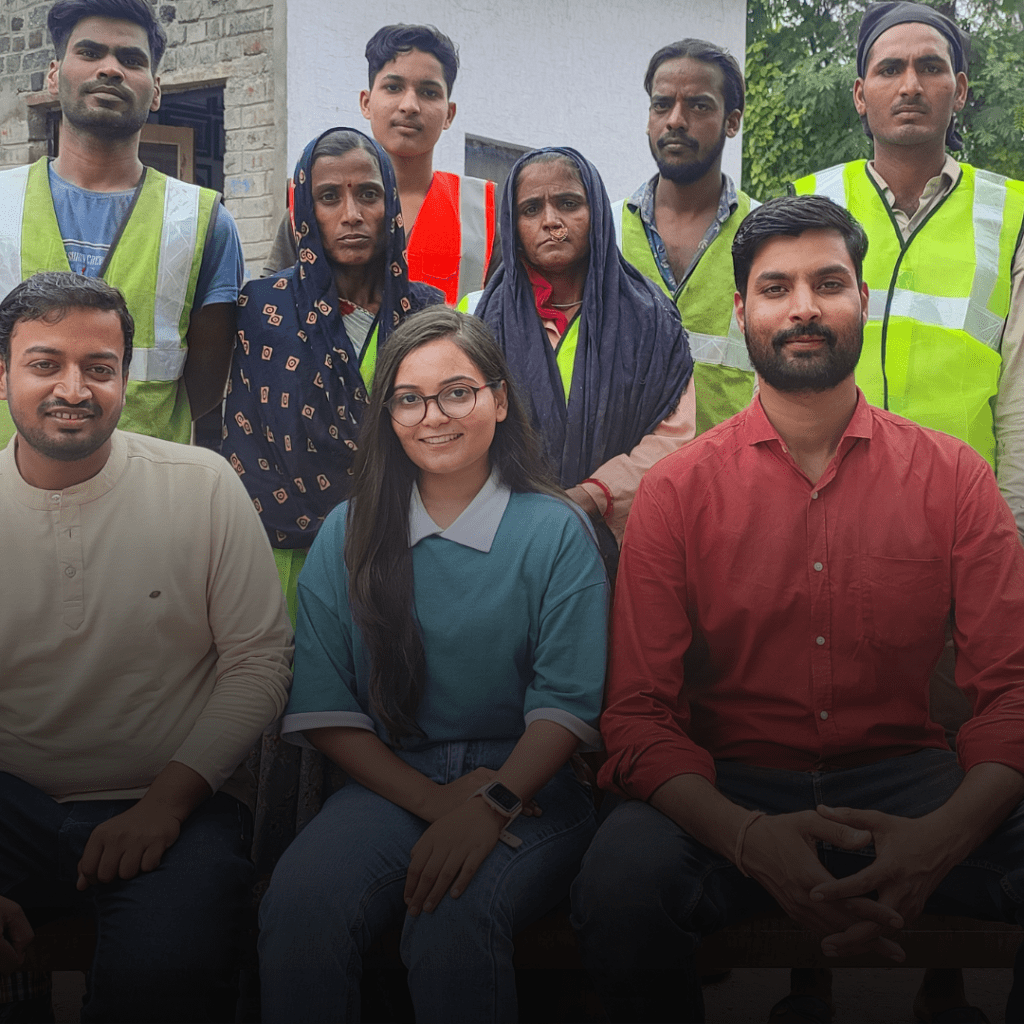
Witnessing single-use plastics choking the beautiful city of Udaipur left a deep imprint on the team at Angirus. This stark contrast inspired a mission: transform waste into something that could rebuild, not destroy. Thus, Wricks®, sustainable bricks made entirely from recycled plastic and industrial waste, was born—a revolutionary step toward solving the dual crises of plastic waste and unsustainable construction.
For every idea, there’s a pivotal moment of validation. For Angirus, it came during a pilot project when a contractor voiced his struggle to find strong, eco-friendly materials for green buildings. His excitement after seeing Wricks® confirmed their product wasn’t just innovative—it was necessary. This early feedback became the catalyst for turning an experiment into a full-fledged solution for the construction industry.
But creating Wricks® was no easy feat. The formulation came to life after countless trials and errors, blending melted plastics with industrial by-products. However, the journey wasn’t just about technical refinement—it was also about navigating the complexities of sourcing waste in an unorganized sector. Establishing reliable supply chains and ensuring affordability while maintaining quality were key hurdles. Yet, these challenges shaped Wricks® into the dampproof, durable, and cost-effective alternative it is today.
The unique formulation of Wricks® reduces water absorption by 80%, making it ideal for flood-prone areas. Engineered to handle heavy loads, Wricks® brings the strength and reliability essential for India’s diverse climate and infrastructure needs. This was a deliberate focus, addressing the real-world challenges of durability and sustainability in construction.
Today, Wricks® is used across India, from Srinagar to Chennai, proving its versatility in diverse climates and geographies. From community toilets to residential buildings and public halls, Wricks® has become a reliable solution for sustainable construction. Each deployment is a step toward redefining what’s possible in eco-friendly infrastructure.
Recognition from the World Economic Forum was a defining moment for Angirus. This accolade opened doors to global networks, investors, and collaborators, boosting Angirus’s credibility and giving its mission an international platform. Beyond validation, it equipped the team with the resources and confidence to scale operations and spread awareness about sustainable construction.
Angirus’s journey through NSRCEL’s Impact Orbit- Circular Economy Program supported by Pernod Ricard India Foundation reinforced the value of community and collaboration. The program emphasized aligning business goals with stakeholder needs and highlighted the importance of listening—to customers, partners, and even critics. These lessons helped refine Wricks®, making the product and the business model more robust.
As Angirus pushes forward, one brick at a time, they’re not just building structures—they’re building a greener, more sustainable world.




Related Blogs
From Idea to Impact: How Cunomial is Revolutionizing Digital Transformation
When Cunomial Technologies was founded five years ago, it was more than just the birth of a software company.
How Hala Mobility Cracked the E-Mobility Code in India?
Hala Mobility is India’s first gen-AI enabled e-mobility aggregator platform that offers an integrated solution for end users to choose from…
From Startup to 100 Crore Success: How iThink Logistics Makes E-Commerce Shipping Efficient and Easy?
Let’s face it, running a D2C brand is no walk in the park. You’ve meticulously crafted your products, built a…