
More than a decade after India introduced mandatory Corporate Social Responsibility (CSR), the around CSR funding has evolved significantly. Many corporates today are thinking beyond compliance. Long-term programs, ecosystem partnerships, and strategic philanthropy are increasingly common.
And yet, one area continues to remain underfunded: innovation-led startups.
Particularly in sectors like deeptech, climate, health, and frontier fintech, founders often struggle to access patient, non-dilutive capital – even when their work addresses large-scale social and economic challenges.
Why does this gap still exist?
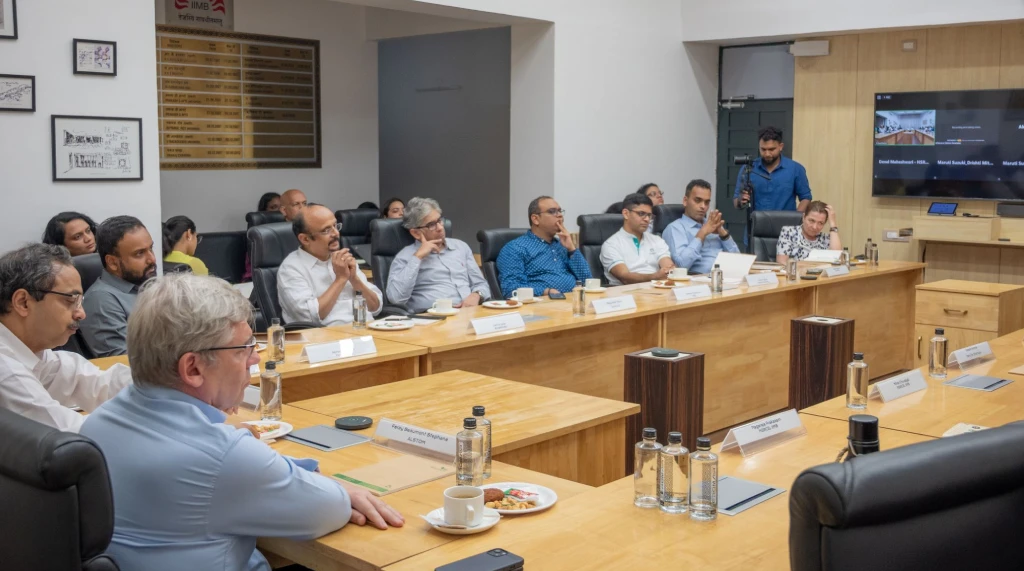
At a recent roundtable convened by NSRCEL, startups, incubators, and CSR leaders came together to discuss exactly this question. What emerged was not simply a debate about intent or willingness to fund innovation. The barriers, in many cases, are structural, operational, and deeply institutional.
The Problem Is Not Always Risk Appetite
It is easy to assume that CSR teams avoid startups because innovation is seen as risky. That is partly true, but the reality is more nuanced.
Many CSR leaders are navigating legal, governance, and board-level expectations that make startup funding difficult to operationalise. In several cases, there is uncertainty around whether innovation-led work- especially through private limited entities – comfortably fits within traditional definitions of “impact.”
There is also confusion around timelines.
A typical CSR funding cycle is designed around annual reporting. But innovation rarely moves in twelve-month cycles. A deeptech startup developing a new material, medical device, or biotech application may spend an entire year just completing regulatory approvals or validating prototypes.
For these founders, twelve months is not enough time to demonstrate measurable outcomes.
What often gets missed is that the law already allows more flexibility than many assume. Under Section 135, CSR projects can operate within a longer-term structure, including multi-year timelines with board approval and third-party assessment mechanisms. In other words, some of the biggest barriers are not regulatory restrictions themselves, but incomplete interpretations of what is already permissible.
The Founders Who Need Capital the Most Are Least Positioned to Access It
Early-stage founders are already stretched across product development, hiring, fundraising, compliance, and customer validation. Expecting them to also educate CSR stakeholders on legal frameworks, reporting models, or funding structures creates an uneven playing field.
As a result, many CSR startup programs tend to engage the same category of ventures: relatively mature startups that already understand grant systems, reporting requirements, and institutional processes.
Meanwhile, founders working on breakthrough but early-stage ideas often remain outside the room entirely.
This creates a compounding problem. The startups that most need patient capital are often the least equipped to navigate the systems required to access it.
And the burden of fixing the system frequently falls on the founders themselves.
Where Incubators Become Critical
This is where incubators can play a much larger role than simply supporting startups through mentorship or workspace.
Increasingly, incubators are becoming translators between two very different worlds: the world of innovation and the world of institutional funding.
They can help CSR teams conduct due diligence on early-stage ventures, structure reporting mechanisms, manage utilisation requirements, and contextualise startup timelines in ways that align with compliance expectations.
But their role is expanding even further.
The more mature incubators today are not only supporting founders; they are actively convening the broader ecosystem. They are bringing startups, corporates, policymakers, regulators, and funders into the same conversations to address structural gaps together.
At NSRCEL, for example, multiple roundtables over the past year have focused specifically on these questions – creating spaces where CSR leaders, government stakeholders, and startups can openly discuss the operational realities of funding innovation.
That kind of convening matters more than it appears on the surface. Ecosystems do not evolve through isolated funding decisions alone. They evolve through shared understanding.
The Infrastructure Gap Nobody Talks About
But this raises another important question:
Who funds the ecosystem-building work itself?
Most CSR support available to incubators is tied to startup outputs — number of ventures supported, grants disbursed, or companies incubated. Activities like policy engagement, ecosystem convening, founder education, or funder sensitisation rarely fit neatly into existing funding structures.
And yet, those are often the exact activities required to unlock more effective capital deployment in the long run.
Incubators are increasingly expected to solve institutional coordination problems across the ecosystem, but there are still very few sustainable mechanisms to support that work.
The irony is hard to miss: the infrastructure needed to make innovation funding work is itself underfunded.
A Bigger Opportunity for India
As India positions innovation at the centre of its economic ambitions, expanding access to patient and non-dilutive capital will become increasingly important.
CSR can play a meaningful role here -not only as a source of funding, but as a long-term enabler of experimentation, research, and institution-building.
That shift will require more than isolated startup grants. It will require boards, CSR leaders, incubators, and policymakers to rethink how innovation is evaluated, how timelines are understood, and how ecosystem infrastructure is supported.
Because if India wants globally relevant innovation, it cannot rely only on market-ready ideas.
It also needs systems willing to fund the uncertain early stages where real breakthroughs begin.



























Related Blogs
From Batteries to Bankability: What Will Make BESS Startups Scale in India?
India’s renewable energy expansion is creating a parallel need that is becoming increasingly difficult to ignore: energy storage that can…
Ask, and NSRCEL Shall Give: How to Actually Use the Ecosystem
When Cunomial Technologies was founded five years ago, it was more than just the birth of a software company.
Taming Adversity
Crises are generally viewed as dangerous, expensive and derailing from main agendas and priorities.